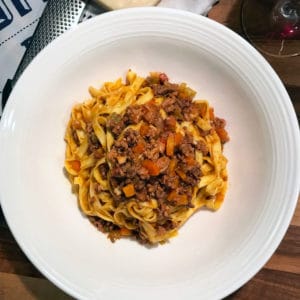
Traditional Italian Bolognese Sauce Recipe

Ragù alla bolognese also known as bolognese sauce is a meat-based sauce originating from Bologna in the region of Emila-Romagna. In 1982 the Academia Italiana della Cucina officially registered the recipe with the Bologna Chamber of Commerce. The registered recipe states that Bolognese sauce must contain onions, celery, carrots, pancetta, ground beef, tomatoes, milk and white wine.
Equipment
- Large Pot
Ingredients
- 3 tablespoons Extra virgin olive oil
- 3 tablespoons Butter
- 1 large Onion finely diced
- 4 small Carrots finely diced
- 2 Celery sticks finely diced
- 4 ½ oz Pancetta unsmoked & cut into small cubes
- 1.1 lbs Ground beef 80/20% fat ratio (beef mince)
- 1.1 lbs Ground pork (pork mince)
- 8 ½ fl oz White wine (about 1 cup)
- 17 fl oz Whole milk (about 2 cups)
- 18 oz Tomato puree passata, (about 2 cups)
- 17 fl oz Beef stock (about 2 cups)
- Salt
- Cracked black pepper
Traditional Serving Option:
- Fresh Tagliatelle
- Parmigiano Reggiano
Instructions
Prepare the Bolognese Sauce:
- In a large, deep sauté pan over medium heat, cook the pancetta for 4-5 minutes until it begins to crisp. Add the butter and olive oil, and once the butter has melted, add the onions, carrots, and celery. Sauté for an additional 5-6 minutes until softened.
- Increase the heat to medium-high, add the ground beef and pork, and season with salt and pepper. Break up the meat with a wooden spoon, stirring frequently, until the liquid from the meat evaporates and it browns.
- Once the meat is browned, reduce the heat to medium. Pour in the white wine and deglaze the pan, scraping any browned bits from the bottom with a wooden spoon. Cook until the wine has almost fully evaporated.
- Add the milk, tomato puree (passata), and beef stock to the pan, stirring to combine. Bring the sauce to a boil, then reduce the heat to low and let it simmer gently for at least 2 hours, stirring every 15-30 minutes. Add a splash of water if needed to maintain a thick, sauce-like consistency.
Serve:
- When the sauce is nearly finished, taste and adjust the seasoning with salt and pepper if needed. Cook the tagliatelle or pasta of your choice in a pot of generously salted boiling water until al dente. Drain the pasta and stir it into the Bolognese sauce.
- Serve immediately, topped with freshly grated Parmigiano Reggiano.
Notes
Tomatoes: You can also use an 18-ounce can of crushed or whole tomatoes. Just make sure to crush whole tomatoes by hand or with an immersion blender beforehand so they are smooth.
Meat: Use 20% fat ground (also known as mince) meat for the maximum amount of flavor.
Traditional Serving: For the most authentic Bologna bolognese pair this sauce with tagliatelle pasta. The most authentic is fresh but dried also works well. Another popular but not traditional pairing is pappardelle (which comes from Tuscany and not Emilia-Romagna) and rigatoni (which is a Roman pasta).
Nutrition: The nutrition label below is for the bolognese sauce, not including serving suggestions like tagliatelle and Parmigiano Reggiano.
Nutrition
Calories: 588kcalCarbohydrates: 15gProtein: 28gFat: 44gSaturated Fat: 16gPolyunsaturated Fat: 3gMonounsaturated Fat: 20gTrans Fat: 1gCholesterol: 119mgSodium: 403mgPotassium: 1006mgFiber: 2gSugar: 9gVitamin A: 4753IUVitamin C: 10mgCalcium: 134mgIron: 3mg
Made this recipe?I’d love to hear what you thought in the comments.